Do This First
- 1Shut off the main water valve. Look where the water line enters the house, commonly in the crawl space, garage, or a utility closet, or at the meter box by the street. For a single fixture, use the small valve under the sink, behind the toilet, or behind the washer.
- 2Turn off the water heater if it's leaking. For gas, set it to "pilot" or "off". For electric, switch off its breaker.
- 3Open a faucet at the lowest point of the house to drain pressure from the lines.
- 4Stay out from under a sagging ceiling. Water-soaked drywall can come down suddenly.
- 5Call a plumber and a restoration company. The plumber repairs the pipe. The restoration company removes the water and dries the structure.
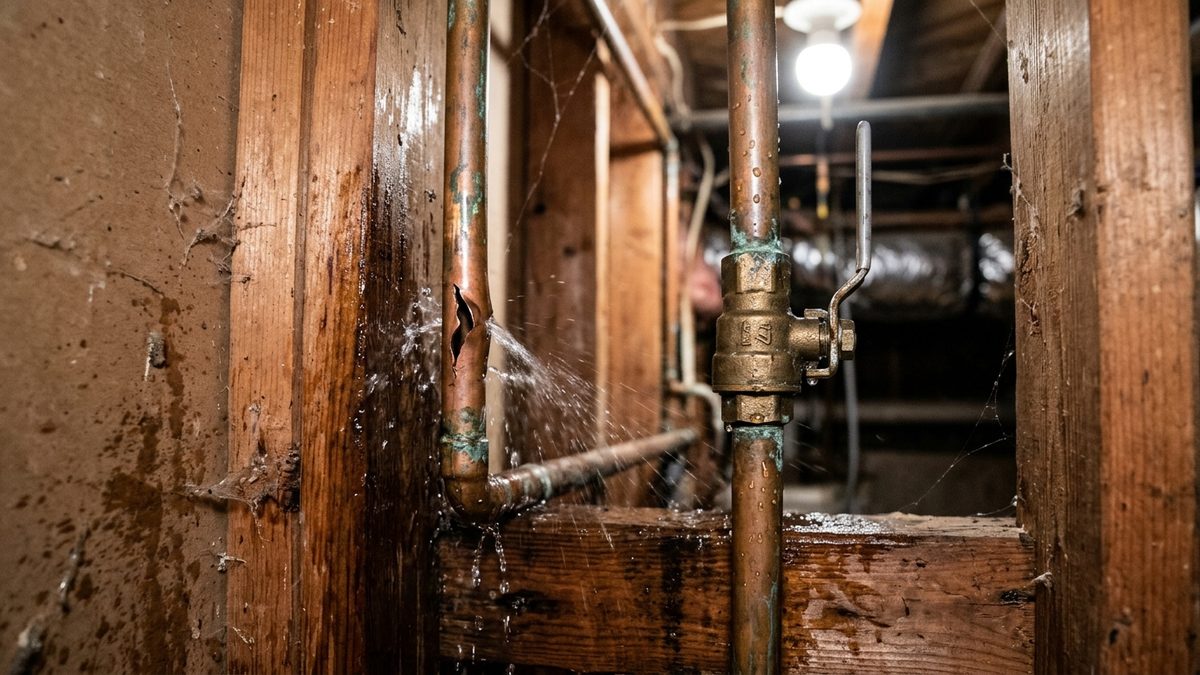
Why Pipes Freeze in King County
Western Washington doesn't get a hard freeze every winter, so many homes weren't built with freezing in mind. When an arctic air mass arrives, often with cold east winds pouring through the Cascade passes, these pipes are most at risk:
- Pipes in crawl spaces with missing or damaged insulation
- Pipes in exterior walls, especially on the north side
- Garages and unheated additions
- Outdoor hose bibs left connected to a hose
- Foothill homes and cabins around North Bend, Snoqualmie Pass, Enumclaw, and Black Diamond, where it gets colder than in town
Frozen pipes often don't leak until they thaw. The damage shows up a day or two after the cold snap ends, sometimes when nobody's home.
Other Common Culprits
- Washing machine hoses. Rubber hoses can burst without warning. Braided stainless hoses last longer.
- Toilet and faucet supply lines under sinks and behind toilets.
- Refrigerator ice-maker lines, which often leak slowly behind the fridge.
- Water heaters, especially older tank units in garages, closets, and basements.
- Dishwasher connections that soak the subfloor under kitchen cabinets.
Drying Ceilings, Walls, and Floors
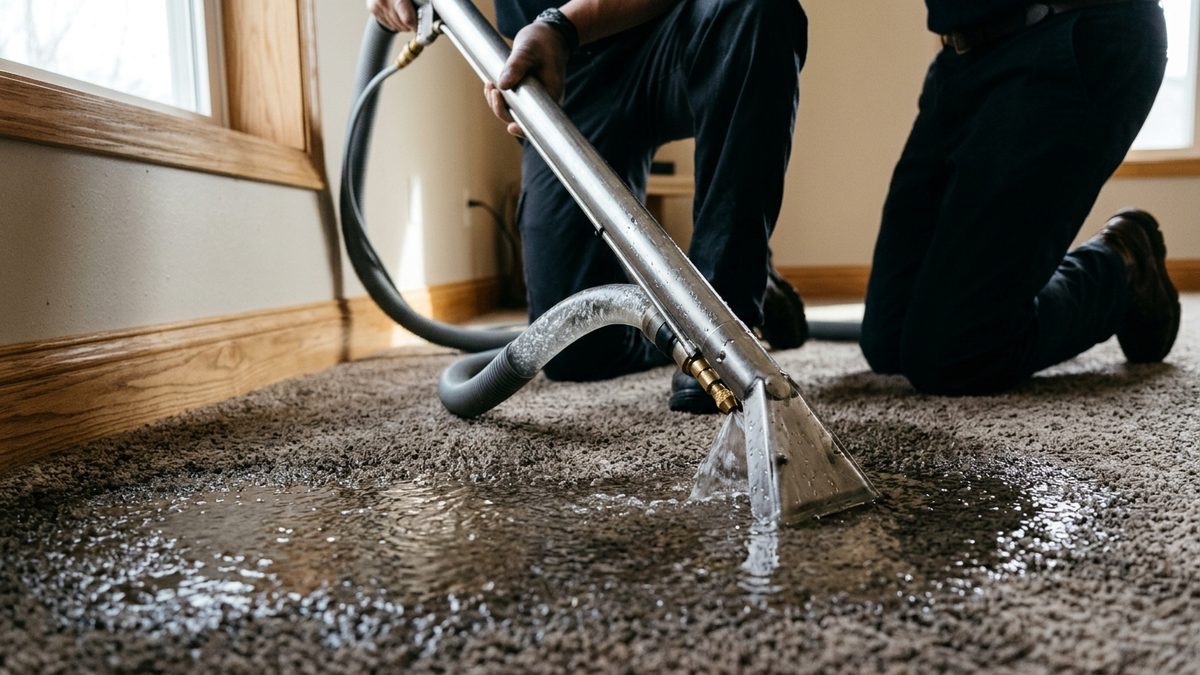
Water from an upstairs leak moves down through ceilings and inside wall cavities. Restoration crews typically:
- Measure moisture in ceilings, walls, and floors to see where the water went
- Extract water from carpet and hard flooring
- Remove baseboards and dry inside walls through small holes when possible
- Remove ceiling drywall that is sagging or saturated
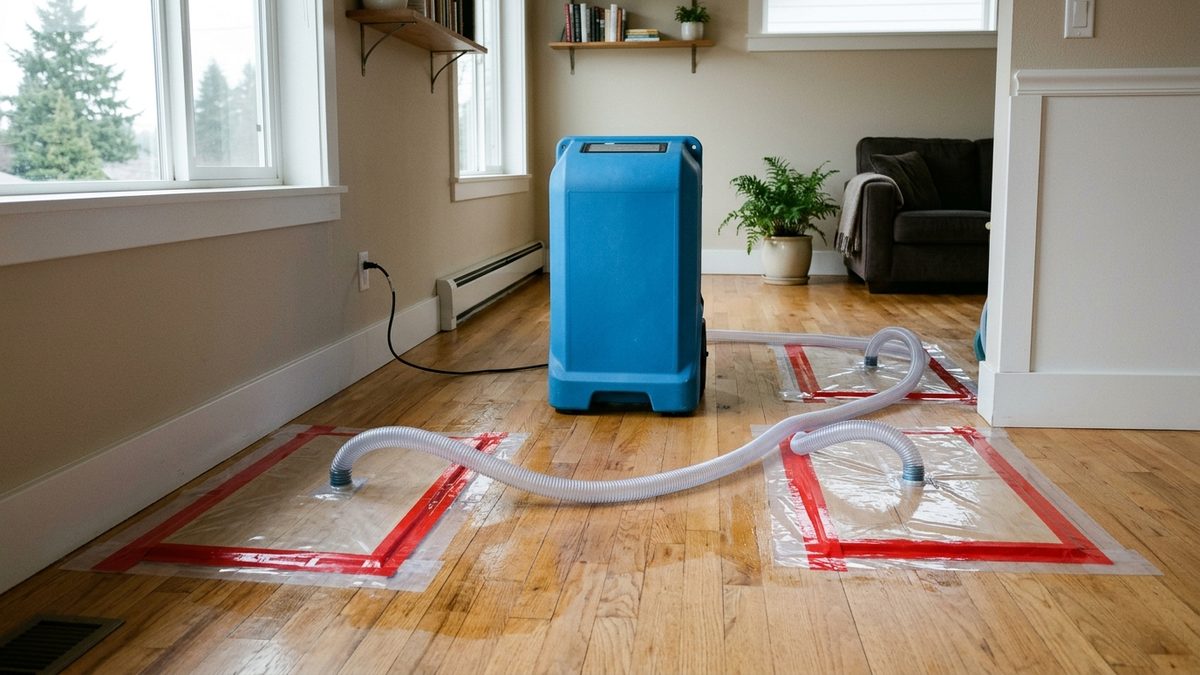
- Use mat-drying systems on hardwood floors to reduce cupping
- Run dehumidifiers and air movers and check moisture daily until materials are dry
Insurance and Burst Pipes
Sudden pipe bursts are one of the most commonly covered types of water damage under standard homeowners policies. There are some important exceptions. Damage from leaks that went on slowly over time is usually excluded. Some policies exclude freeze damage if the home was vacant or the heat wasn't kept on. Policies usually pay for the water damage but not for fixing the pipe itself. Check your policy and see our insurance guide.
Preventing Burst Pipes
- Insulate crawl space and garage pipes before winter.
- Disconnect hoses and cover hose bibs in the fall.
- During a freeze, keep the heat on (at least the mid-50s °F if you're away), open cabinet doors on exterior walls, and let a faucet drip.
- Replace washing machine hoses every few years.
- Know where your main shutoff is before you need it.
Frequently Asked Questions
My pipe burst while I was away. What now?
Shut off the water, photograph everything, and call for help right away. Report the claim to your insurer as soon as possible.
Can water-damaged drywall be dried instead of replaced?
If it was clean water and drying starts quickly, often yes. Drywall that has sagged, crumbled, or soaked up contaminated water is replaced.
How long will the drying equipment be in my house?
Usually several days. Technicians take readings each day and remove equipment once materials reach their drying goals.