Keep Everyone Safe Right Now
- Keep children, pets, and anyone with a weakened immune system out of the area.
- Don't flush toilets, run the dishwasher, or do laundry. That sends more water into a blocked line.
- Don't walk through sewage, and don't try to mop or vacuum it.
- If you can, turn off heating or air systems that pull air from the affected area.
- Wash your hands thoroughly if you touched anything.
What Causes Sewage Backups
- Main sewer line clogs. Tree roots in older clay or concrete pipes, grease, and "flushable" wipes are the usual suspects.
- Heavy rain. During big storms, overloaded sewer lines can push water back up through the lowest drains in a house, usually basement floor drains and toilets.
- Septic system failure. Many homes in rural King County are on septic. In the wet season, saturated drainfields can't absorb water and the system backs up into the house.
- Broken or collapsed lines under the house or yard.
A plumber or septic professional needs to find and fix the cause. A restoration company handles the cleanup.
What Professional Sewage Cleanup Involves
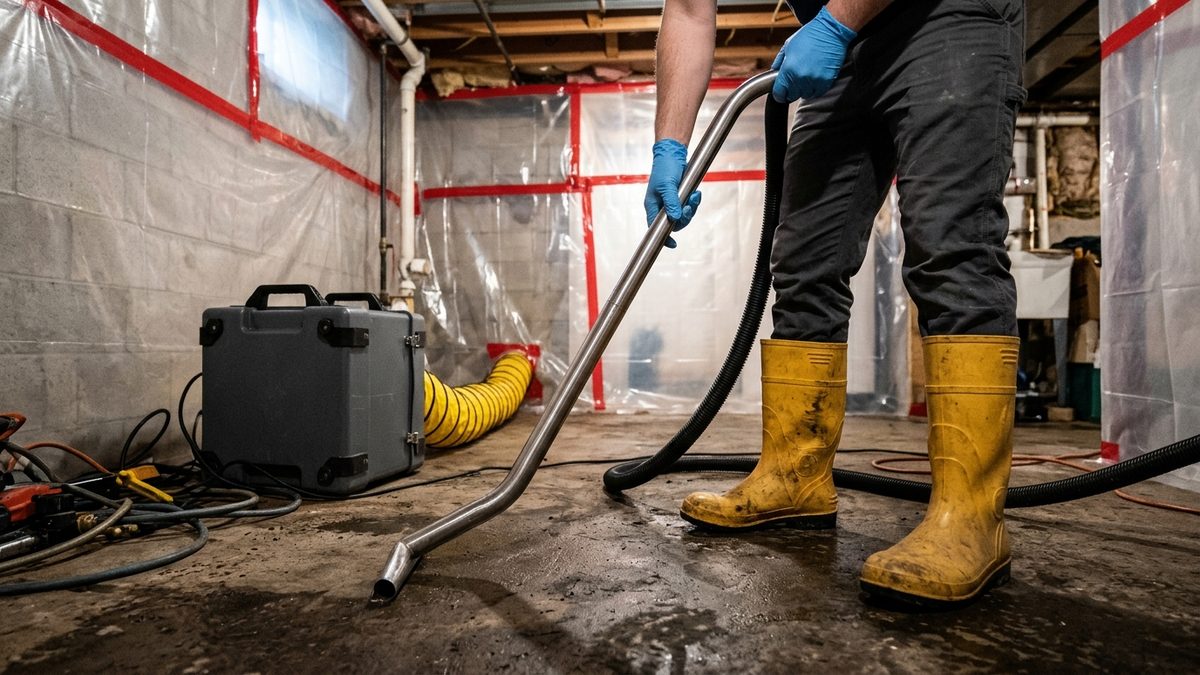
- 1Protective equipment. Technicians wear gloves, boots, and respiratory protection.
- 2Containment. The area may be sealed off with plastic so contamination doesn't spread.
- 3Extraction. Sewage and contaminated water are pumped and vacuumed out.
- 4Removing porous materials. Under the IICRC S500 standard, porous materials soaked by black water, such as carpet, pad, upholstery, insulation, and usually drywall up to a cut line, are generally removed and thrown away.
- 5Cleaning and disinfection. Hard surfaces and framing are cleaned and treated with antimicrobial products.
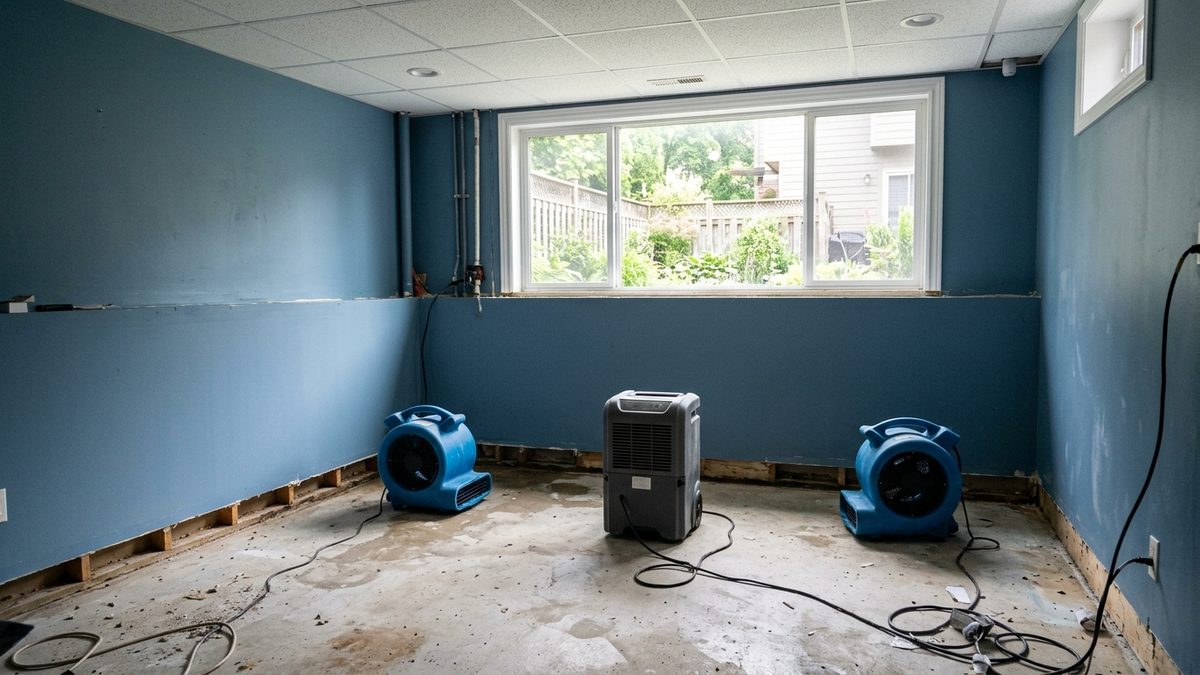
- 6Drying. Dehumidifiers and air movers dry the structure.
- 7Odor control. Air scrubbers with HEPA filters help clear odors and airborne particles.
Septic Backups in Rural King County
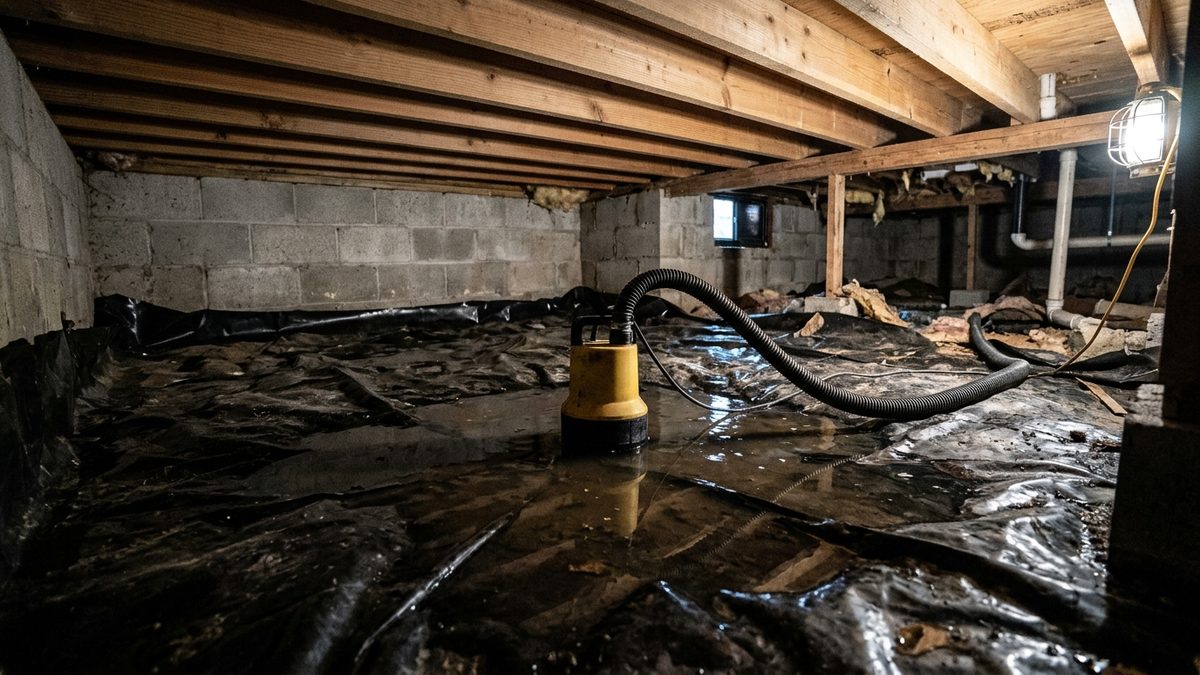
Septic systems are common in unincorporated and rural parts of the county, including around Hobart, Ravensdale, the Snoqualmie Valley, the Enumclaw Plateau, and Cottage Lake. If your home is on septic, call a septic pumping service to deal with the tank and drainfield, and a restoration company for the inside of the home. Backups are most common in winter, when drainfields are saturated.
Does Insurance Cover Sewage Backup?
Often not by default. Many homeowners policies exclude sewer and drain backup unless you've added a water backup (sewer backup) endorsement. If you have that coverage, it usually has its own limit. Check your policy before the cleanup starts, and see our insurance guide.
Frequently Asked Questions
Can I clean up a small sewage backup myself?
A very small toilet overflow on a hard floor can sometimes be cleaned with gloves and disinfectant. Anything that reached carpet, drywall, a crawl space, or a basement should be handled by professionals.
Do I have to throw away my carpet?
Carpet and pad soaked with sewage are generally not salvageable under industry standards.
How long until the house is safe to use again?
It depends on how large the area is. A small bathroom backup may be done in a day or two. Basements and crawl spaces take longer because of material removal and drying.