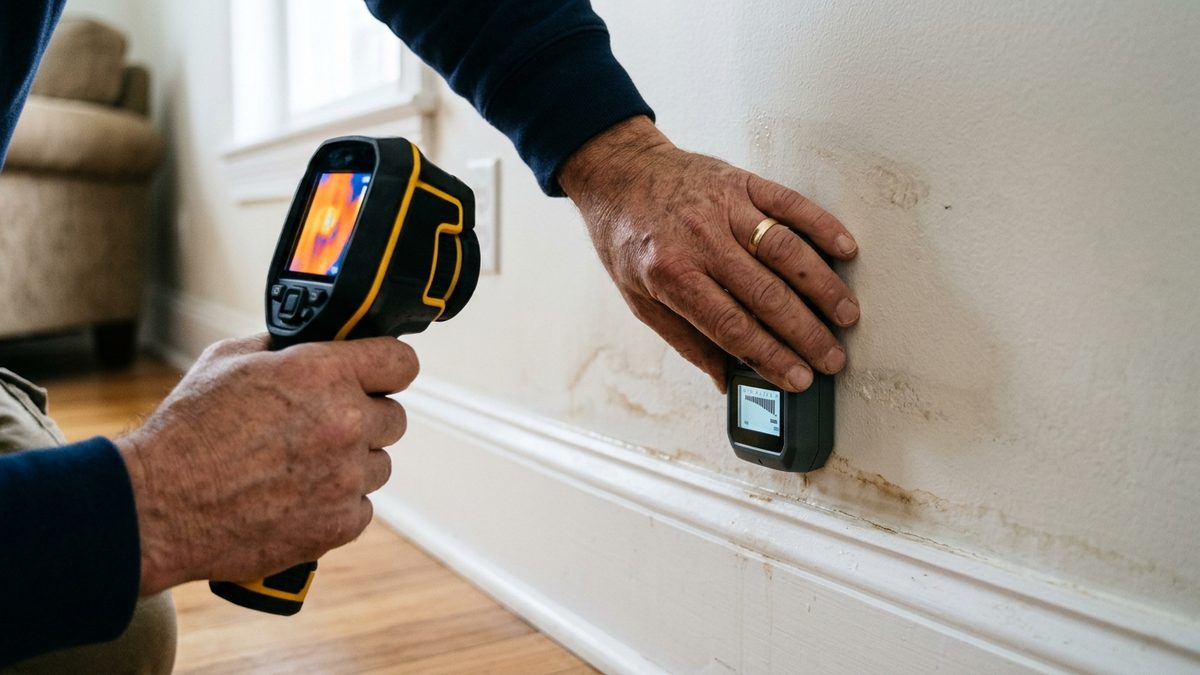
How a Moisture Inspection Works
- Moisture meters measure moisture in wood, drywall, and concrete. Pin meters read a specific point. Pinless meters scan larger areas without leaving marks.
- Thermal imaging cameras show temperature differences that often point to wet materials. They don't detect water directly, so findings are confirmed with a meter.
- Hygrometers measure humidity in rooms and crawl spaces.
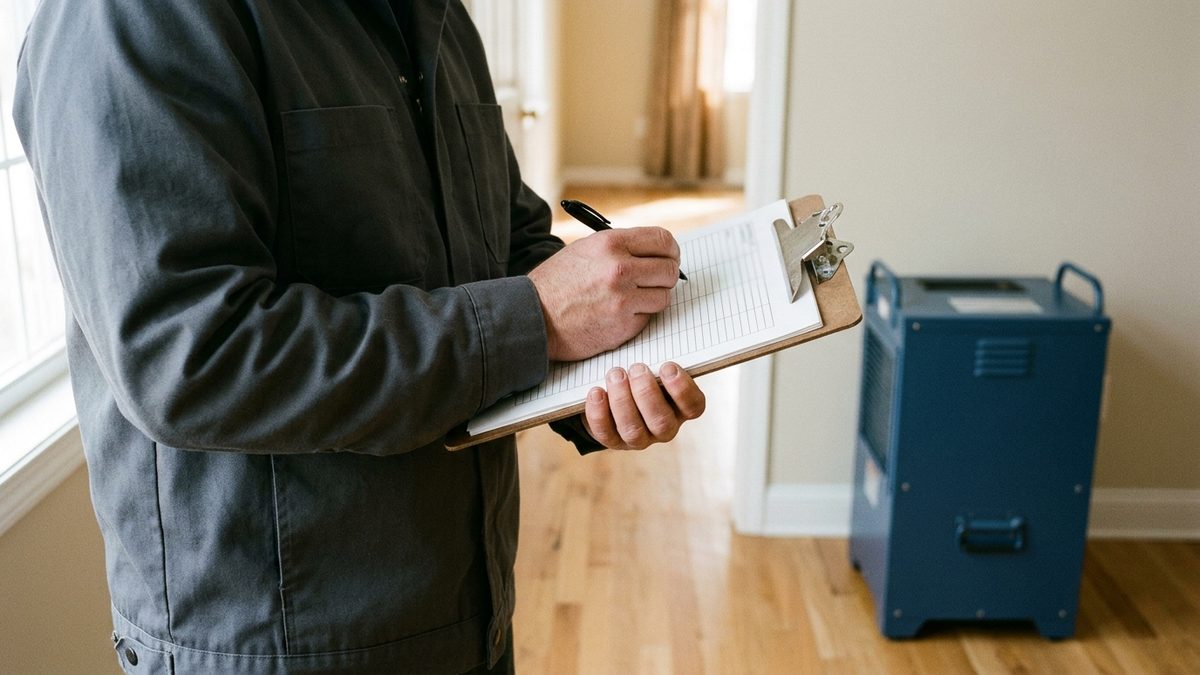
- A moisture map, a sketch or photo record of the wet areas, guides drying and gives your insurer documentation.
Preventing Mold After Water Damage
- 1Find all the water. Moisture mapping shows where it spread.
- 2Remove what can't be dried. Wet insulation, swollen particleboard, and saturated carpet pad hold moisture.
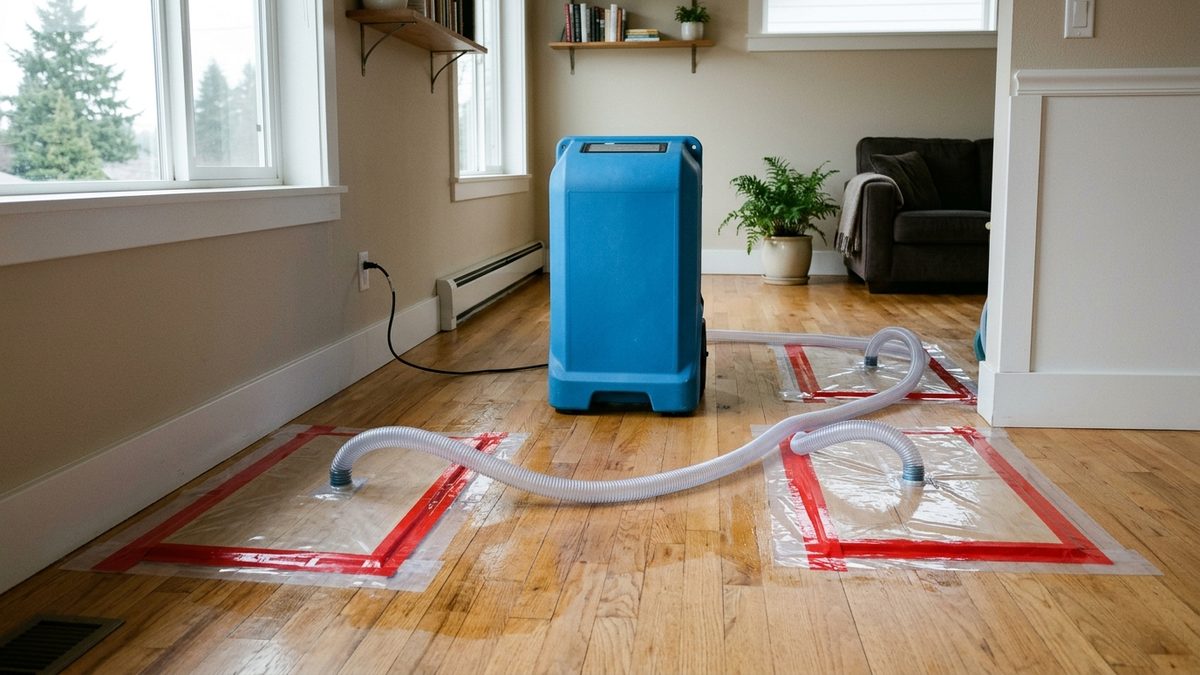
- 3Dry the structure fast. Commercial dehumidifiers and air movers bring materials back to normal moisture levels.
- 4Clean and treat. Affected surfaces may be cleaned and treated with antimicrobial products during drying.
- 5Verify. Final readings confirm materials are dry before walls are closed up or floors are reinstalled.
Already Seeing Mold?
Preventing mold during drying and removing an established mold problem are different jobs. The EPA's guidance is that homeowners can usually clean small areas, under about 10 square feet, themselves. Larger areas, mold inside walls or ductwork, or mold after a sewage backup call for a professional. Mold also comes back if the moisture source isn't fixed.
Why Moisture Problems Are Common Here
King County's long wet season, crawl space construction, and mild temperatures mean moisture problems build slowly and often go unnoticed. That's especially true in crawl spaces, behind bathroom and kitchen walls, and under homes near creeks and rivers.
Frequently Asked Questions
Is a moisture inspection worth it if the leak was small?
If water got into drywall, under flooring, or into a crawl space, yes. Small leaks inside walls are a common source of mold.
Can a thermal camera see through walls?
No. It reads surface temperature. Wet materials are often cooler, which shows technicians where to take meter readings.
How fast can mold grow?
Mold can start growing on wet materials within a day or two, which is why fast drying matters.